


 Francés
 Español
 Português
 Русский
 العربية
 Deutsch
 日本語
日本語
 Nederlands
 Kiswahili


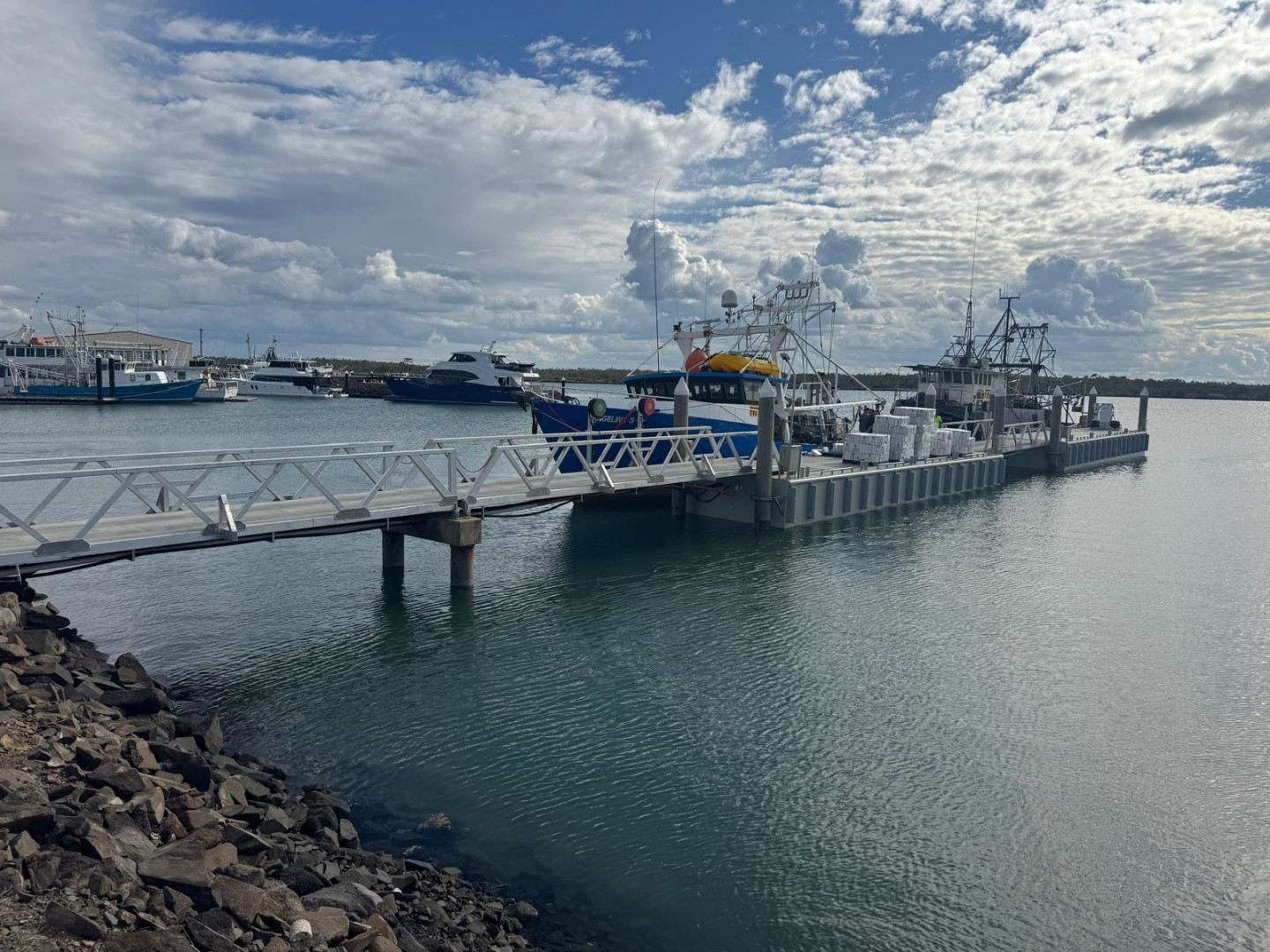
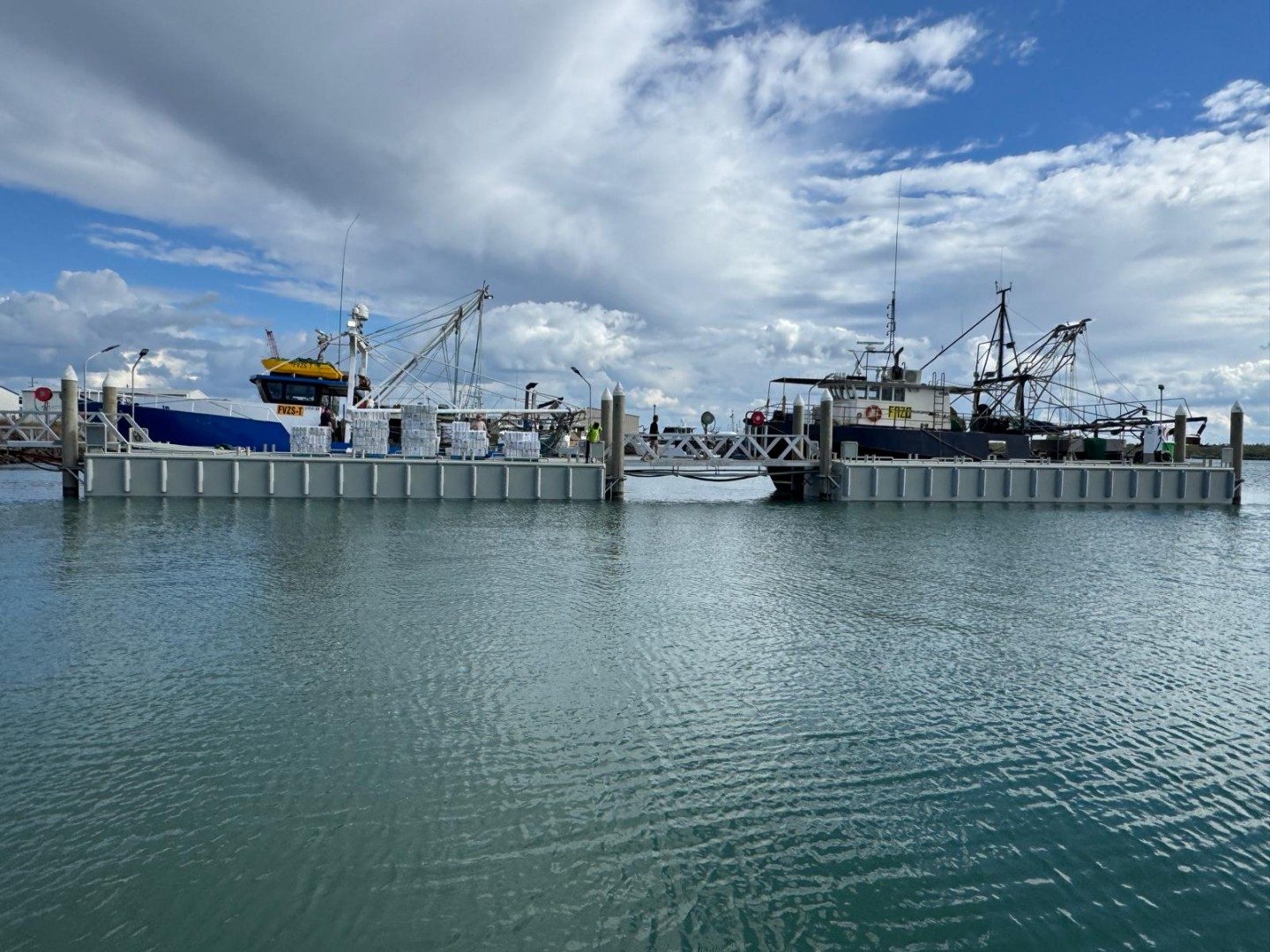
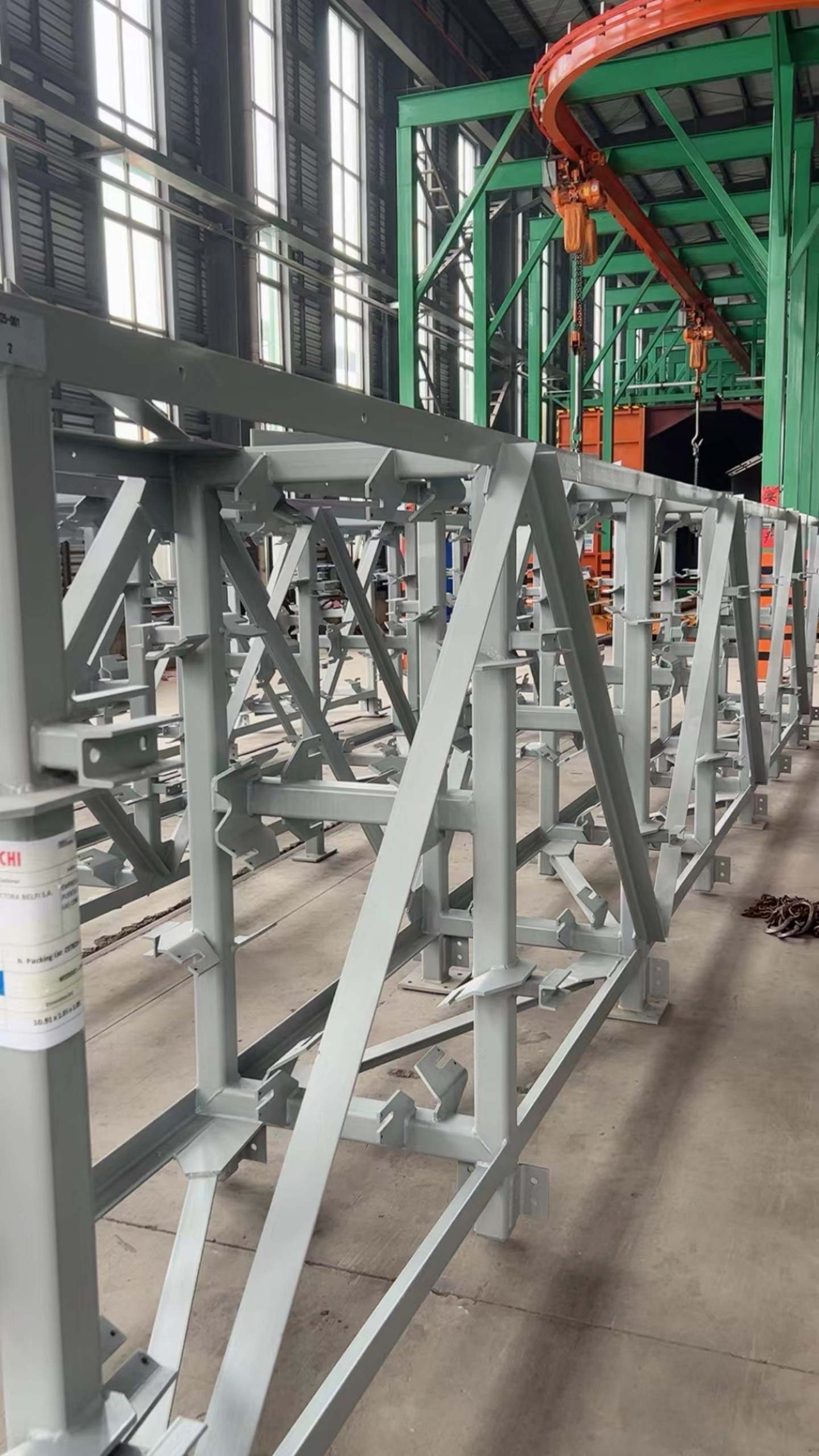
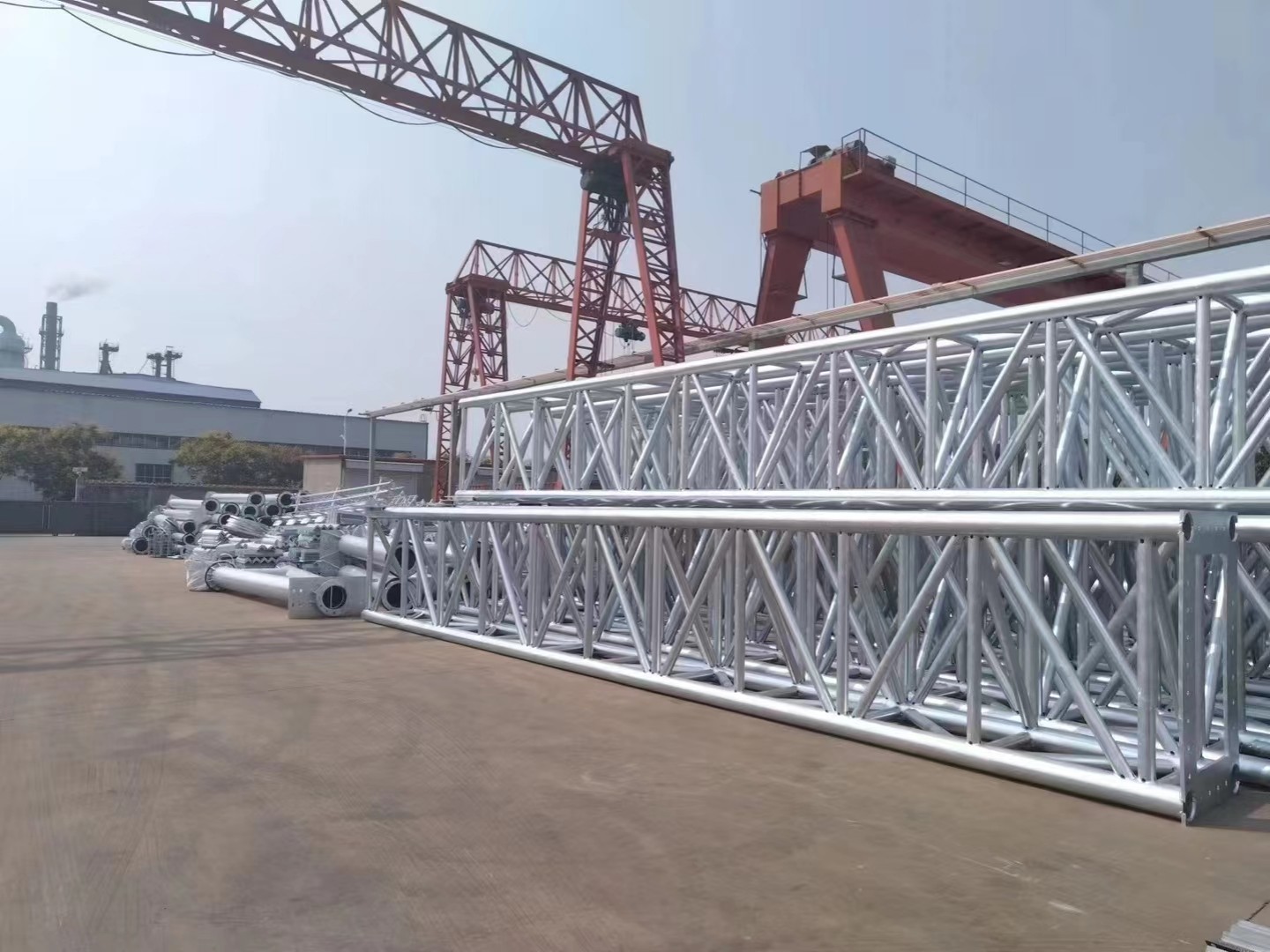
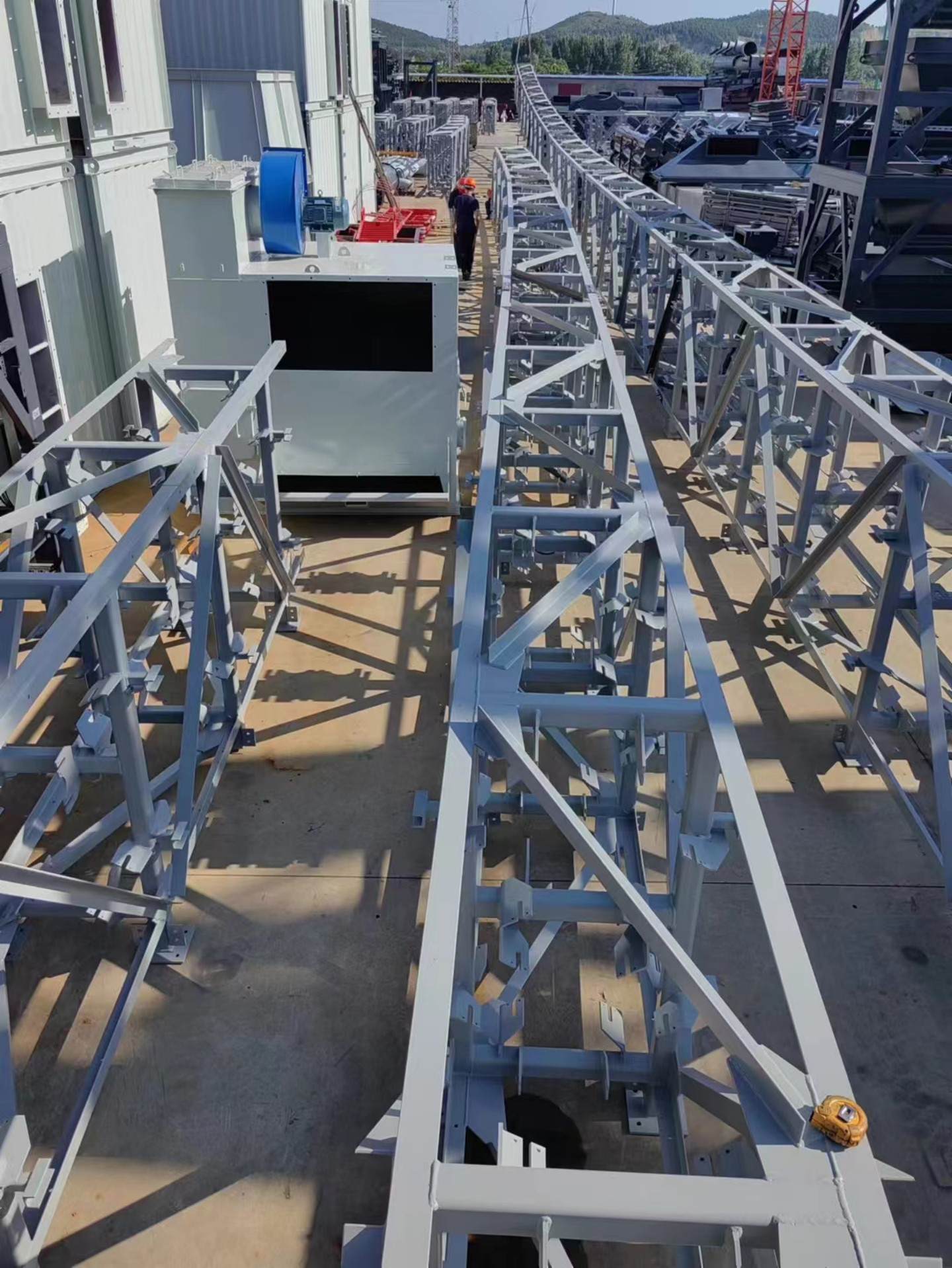
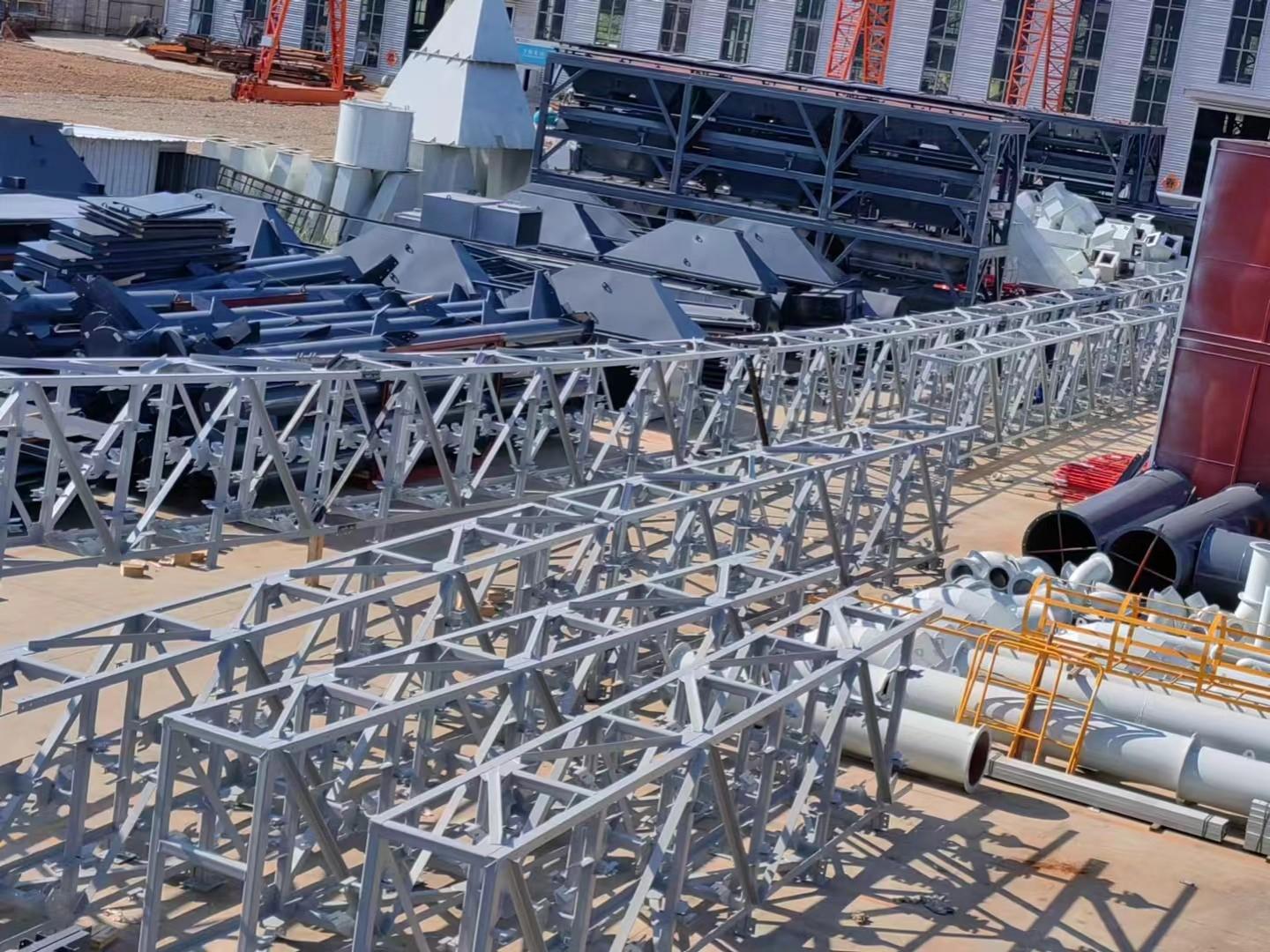
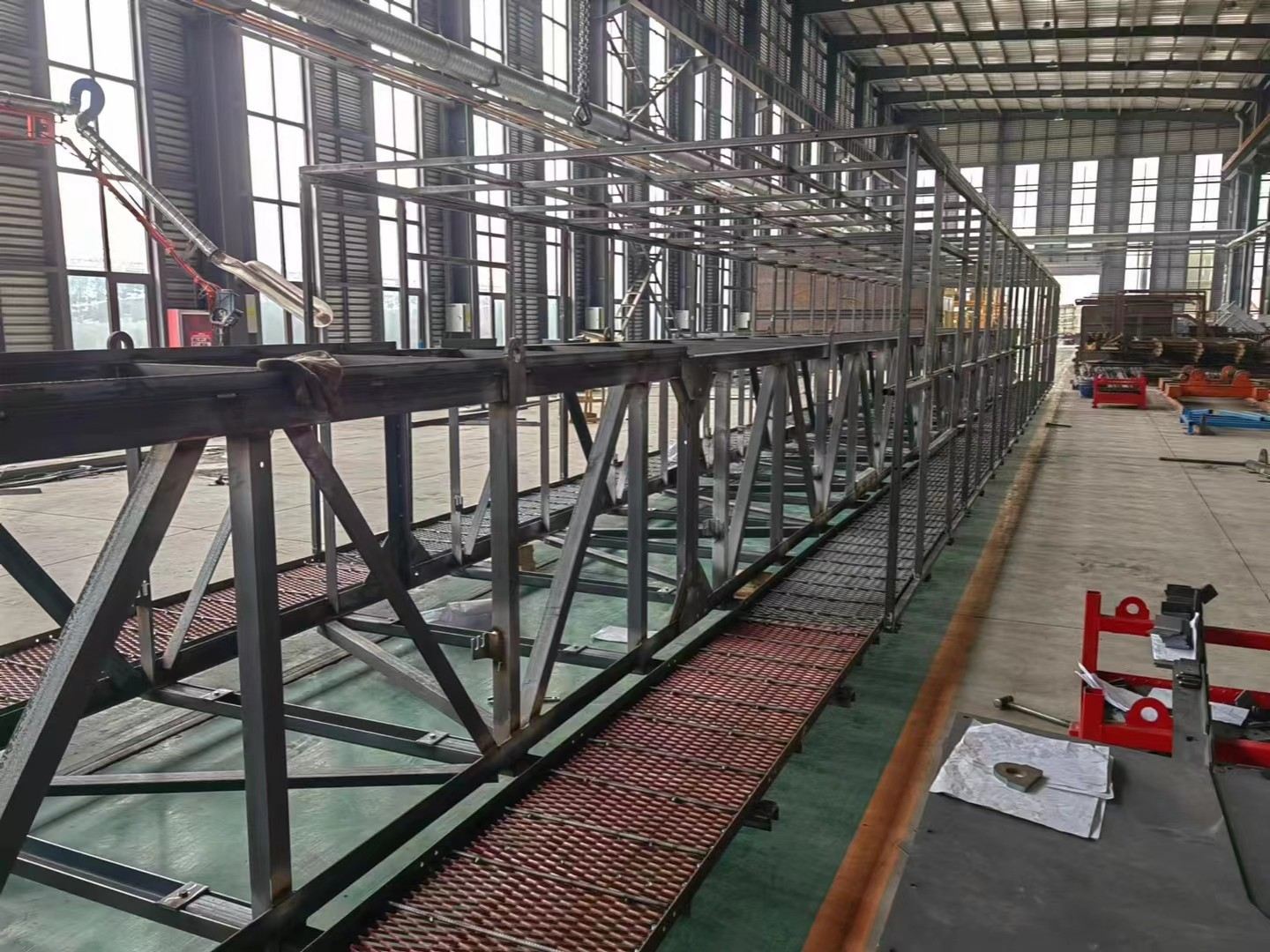
Steel structure transportation system
1. High Strength and Lightweight
Material Properties: Steel offers high strength with low weight, being 30%-50% lighter than concrete structures under the same load, reducing transportation and hoisting costs.
High Load Capacity: Suitable for large-span and heavy-load transportation scenarios (e.g., bridge components, large equipment).
2. Modularity and Standardization
Rapid Assembly: Prefabricated components are factory-produced, enabling quick on-site assembly and shortening construction time (50%+ faster than traditional methods).
Flexible Adaptation: Customizable module sizes to fit different transportation needs (e.g., containerized or modular buildings).
3. Durability and Environmental Resistance
Corrosion Resistance: Galvanization, coatings, or weather-resistant steel technology extend service life (up to 50+ years).
Product Details
Introduction
The production process of steel structure transport system products typically includes design, raw material procurement, processing and fabrication, quality inspection, surface treatment, transportation, and installation. Below is a detailed breakdown of the process:
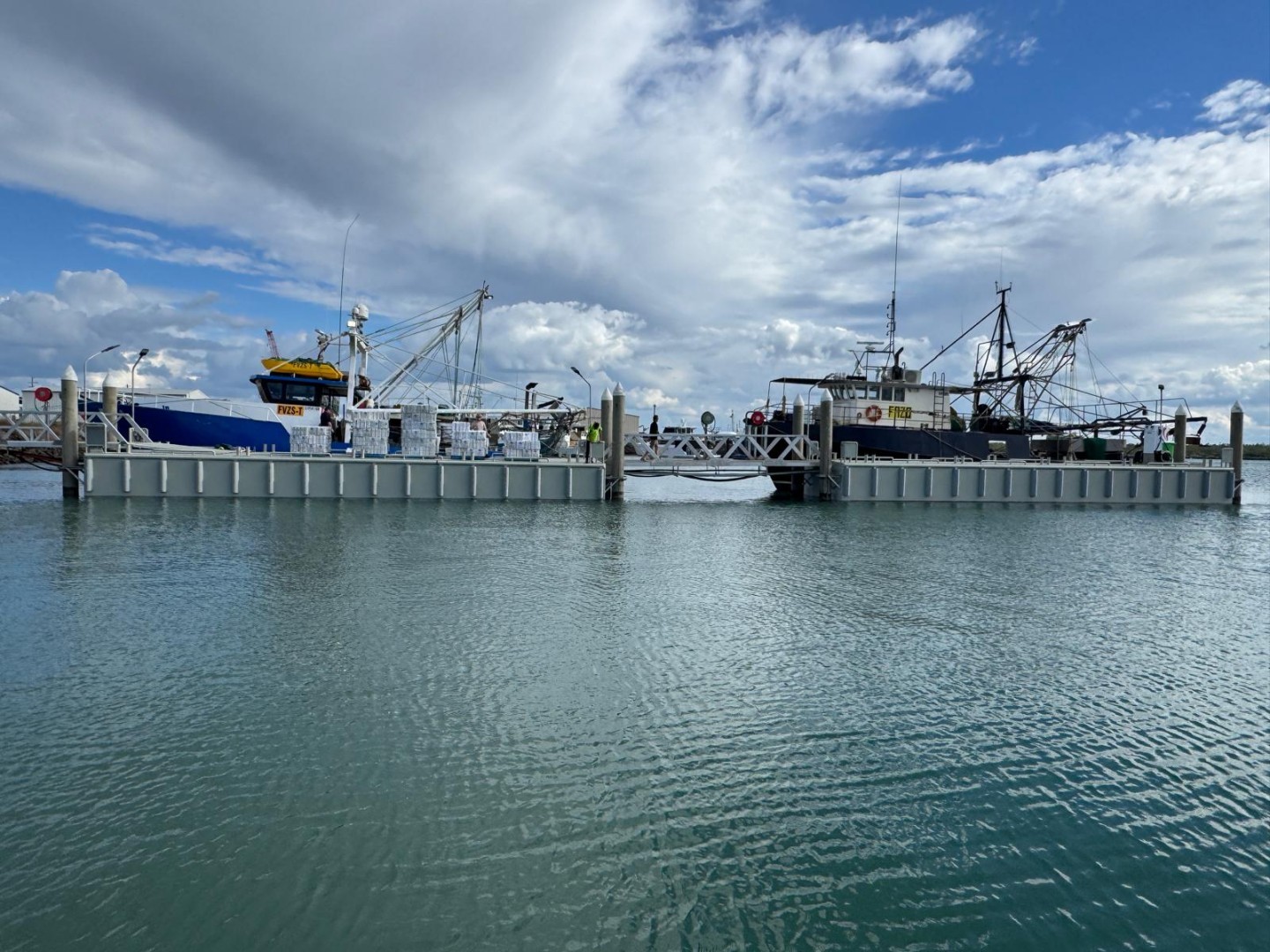
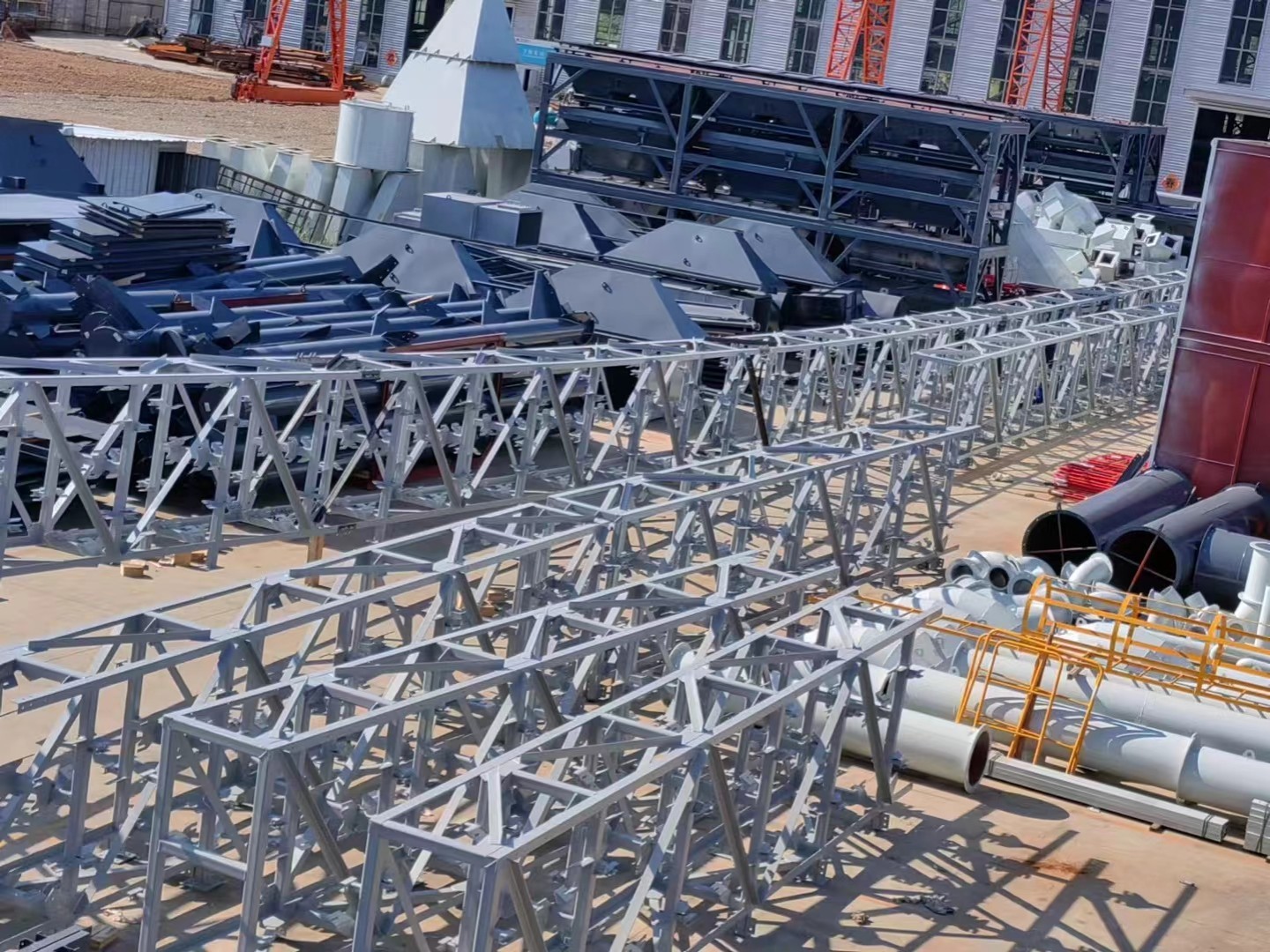
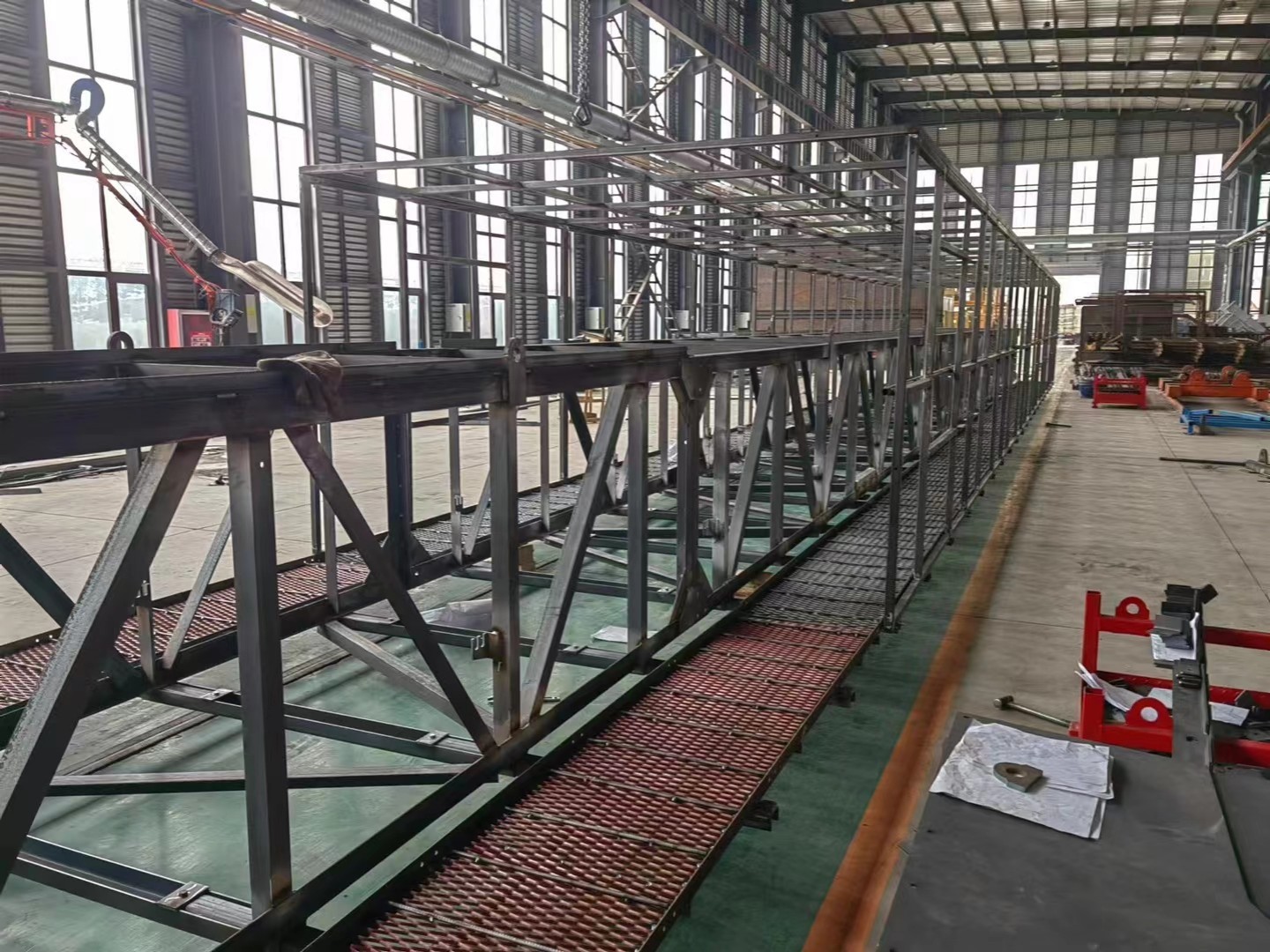
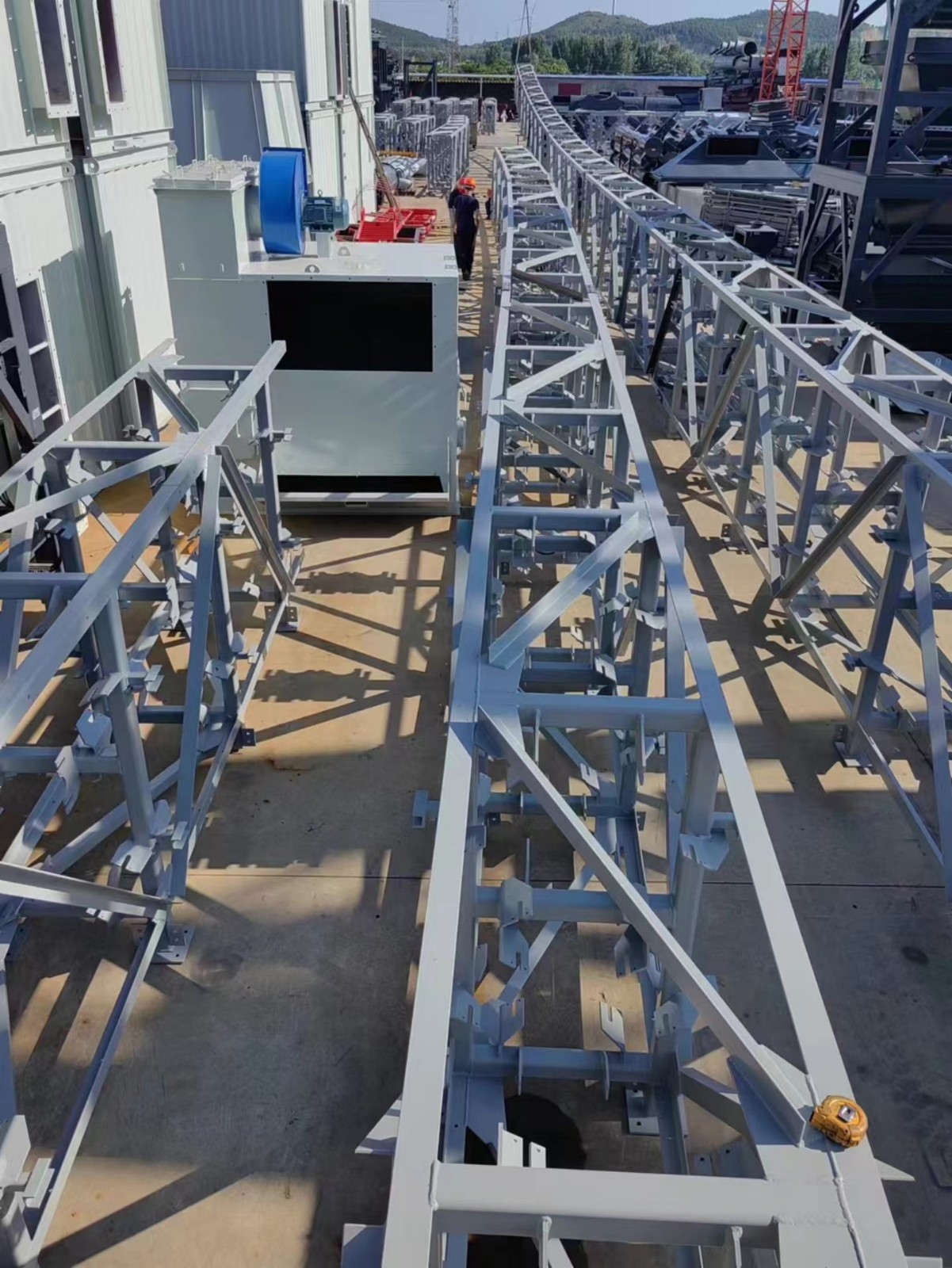
1. Design Phase
Requirement Analysis: Clarify customer needs, determine the system's purpose (e.g., logistics conveying, storage equipment), load capacity, and operating environment.
Structural Design: Use CAD/3D modeling software (e.g., SolidWorks, Tekla) to design steel structures, including trusses, supports, rails, and other components.
Mechanical Calculations: Verify structural strength, stiffness, and stability through finite element analysis (FEA).
Drawing Output: Generate fabrication drawings, assembly diagrams, and a Bill of Materials (BOM).
2. Raw Material Procurement
Steel Selection: Purchase section steel (H-beams, I-beams), steel plates, steel pipes, etc., based on design requirements. Common materials include Q235B/Q355B (Chinese standards) or ASTM A36/A572 (international standards).
Auxiliary Materials: Bolts, welding rods, anti-corrosion coatings, etc.
3. Processing and Fabrication
(1) Cutting
Use flame cutting, laser cutting, or sawing machines to cut steel materials, ensuring dimensional accuracy.
Deburr and polish cut edges.
(2) Forming
Bending/Rolling: Cold or hot bending of steel plates (e.g., conveyor rollers).
Drilling/Milling: Process bolt holes or connection points.
(3) Welding & Assembly
Component Welding: Use submerged arc welding, CO₂ gas shielded welding, etc., to weld main structures (e.g., trusses, brackets).
Pre-Assembly: Conduct trial assembly in the factory to check fit and dimensions.
(4) Machining
Perform precision machining on high-tolerance components (e.g., rail joints) to ensure flatness and dimensional accuracy.
4. Quality Inspection
Weld Inspection: Check welding quality via ultrasonic testing (UT), magnetic particle testing (MT), or X-ray testing (RT).
Dimensional Check: Verify critical dimensions (e.g., span, verticality) against design drawings.
Load Testing: Conduct simulated load tests (e.g., trial operation of conveyors).
5. Surface Treatment
Rust Removal: Achieve Sa2.5 grade (ISO 8501 standard) via sandblasting or shot blasting.
Anti-Corrosion Coating:
Primer: Epoxy zinc-rich primer;
Intermediate coat: Epoxy mica iron oxide paint;
Topcoat: Polyurethane paint (selected based on environmental requirements).
Galvanizing (Optional): Hot-dip galvanizing (for high-corrosion outdoor environments).
6. Packaging & Transportation
Protective Packaging: Use wooden crates for precision components (e.g., rails) to prevent deformation during transit.
Labeling: Mark lifting points, center of gravity, and moisture-proof indicators.
7. On-Site Installation
Foundation Inspection: Verify the position and levelness of embedded parts.
Sectional Hoisting: Use cranes to install main structures.
Bolting/Welding: Initial and final tightening of high-strength bolts or on-site welding.
Commissioning: Adjust rail straightness and conveyor operation smoothness.
8. Handover & Acceptance
Customer Inspection: Verify technical parameters and sign acceptance documents.
Documentation Transfer: Provide material certificates, operation manuals, and maintenance guidelines.
Send your message to us
Related Products

Related News
Submitted successfully
We will contact you as soon as possible
Close