Product Introduction: Steel Structure Bridges
Steel structure bridges are load-bearing structures primarily constructed using high-strength steel as the main building material. Widely applied in highways, railways, urban overpasses, and large-span crossings, they are characterized by their lightweight design, flexible forms, and superior spanning capacity. Typical structural types include beam bridges, arch bridges, cable-stayed bridges, and suspension bridges, offering adaptable engineering solutions for diverse topographical and functional requirements.
Product Advantages
High Strength and Lightweight Design
Steel’s excellent strength-to-weight ratio allows for long spans and reduced self-weight, minimizing loads on substructures and foundations. This enables more economical and efficient designs, particularly for crossings over rivers, valleys, or existing infrastructure.
Rapid Construction and Minimal Environmental Impact
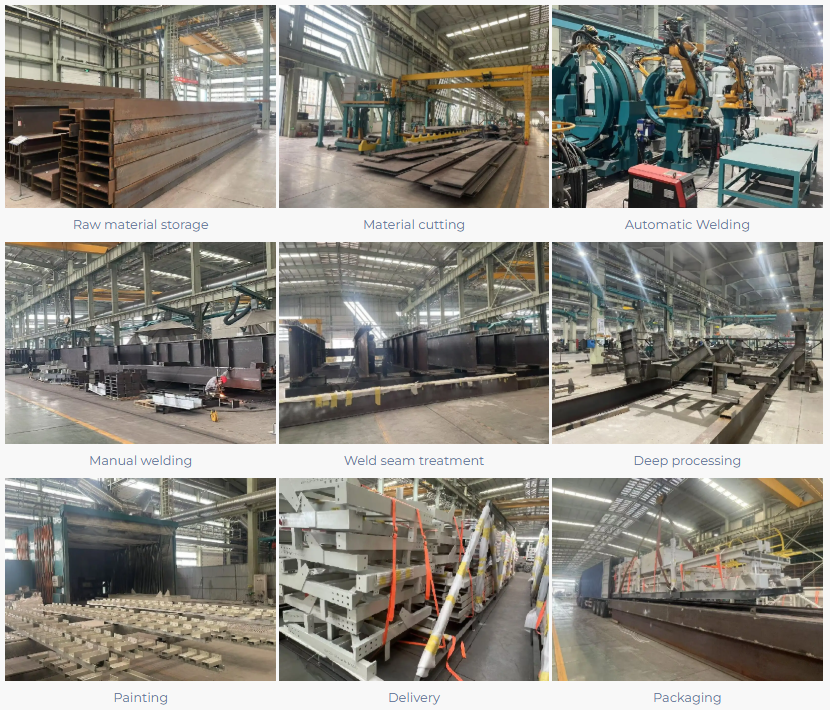
Prefabricated steel components can be manufactured off-site and assembled quickly on-site, significantly shortening construction periods. This approach reduces traffic disruption, lowers construction noise and waste, and lessens ecological disturbance in sensitive areas.
Durability, Adaptability, and Sustainability
Modern steel materials and anti-corrosion technologies (e.g., galvanizing, coating) ensure long-term durability even in harsh environments. Steel bridges are also easier to inspect, maintain, and strengthen, and their materials are fully recyclable, aligning with sustainable infrastructure goals.


Company introduction


Summary
Steel structure bridges provide a reliable, efficient, and environmentally conscious solution for modern transportation networks. By combining advanced material performance with rapid construction and lifecycle sustainability, they meet the evolving demands of safety, economy, and adaptability in bridge engineering. As a versatile and proven option, steel bridges continue to play a vital role in global infrastructure development.


 Francés
 Español
 Português
 Русский
 العربية
 Deutsch
 日本語
日本語
 Nederlands
 Kiswahili